







There are many reasons to love hiking. Perhaps you like this way of exercising or exploring new places. In short, if you enjoy hiking, it's because you enjoy being outdoors. There's nothing like feeling the gentle warmth of the sun on your face and enjoying the sounds of beautiful nature all around you, all experiences that are unique to outdoor activities.
No matter how often or how much time you spend hiking, you'll want to make the most of every moment. Can binoculars help you do just that? By the way, what are the best hiking binoculars?
Why use hiking binoculars?
Depending on where you live, you'll find plenty of beautiful scenery to enjoy close to home. Perhaps you live in a mountainous region or near a lake or ocean that offers superb views. Or perhaps you enjoy hiking in the forest, where you can often spot wildlife in the distance. You've probably also seen certain species of birds flying overhead and resting in the nearby trees.
The truth is, no matter where you live, there's always something amazing worth watching. The problem isn't finding something to see, but rather having the opportunity to observe it even more closely. The landscape is far away, wildlife may run away at the slightest noise, and birds often fly too high or too far to have the chance to appreciate all its elegance and beauty.
It's precisely in these cases that binoculars are a must. What could be more beautiful than observing the landscapes and wildlife that surround us? While keeping a safe distance, you can enjoy a close-up view of the landscape you wish to observe. This way, forest animals will no longer be afraid and you'll be able to better appreciate birds in flight.
How to choose the best hiking binoculars?
When it comes to choosing binoculars suitable for hiking, there are four main factors to consider:
- Magnification and lens diameter,
- weight,
- Field of view,
- Environment.
Lens magnification and diameter
As you probably already know, all binocular models are characterized by two numbers. For example, you've already seen or heard of 10×50 binoculars. But what do these numbers actually mean?
The first number indicates the magnification or close-up factor. This criterion determines how closely you can observe your target. Although this is an important factor, it shouldn't be decisive. Let's see why.
The second number is the lens diameter, measured in millimeters. More precisely, it's the size of the diameter of the two large lenses you're pointing at your target, not the eyepieces you're holding in front of your eyes.
Binoculars with larger-diameter lenses capture more light, and while this may be an important factor for hobbies such as astronomy, it's not the case for hiking, for several reasons. Firstly, when you're hiking, you spend most of your time outdoors, in the middle of the day, when light isn't a problem. The second reason is the weight of the binoculars.

The weight
Binoculars with larger-diameter lenses are naturally heavier. I'm sure you'll agree that, when hiking, we like to carry as little as possible to make walking easier. That said, since larger binoculars collect more light, they can enable you to see more detail and get a better quality image, although both also depend on the quality of the optical instruments, such as lenses and prisms.
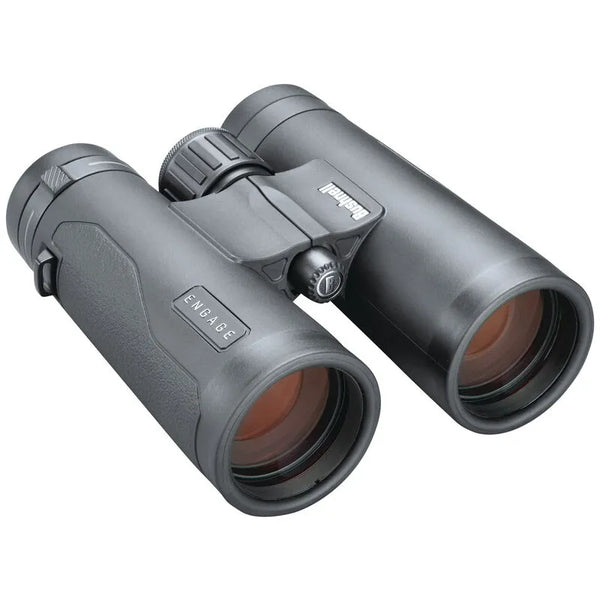
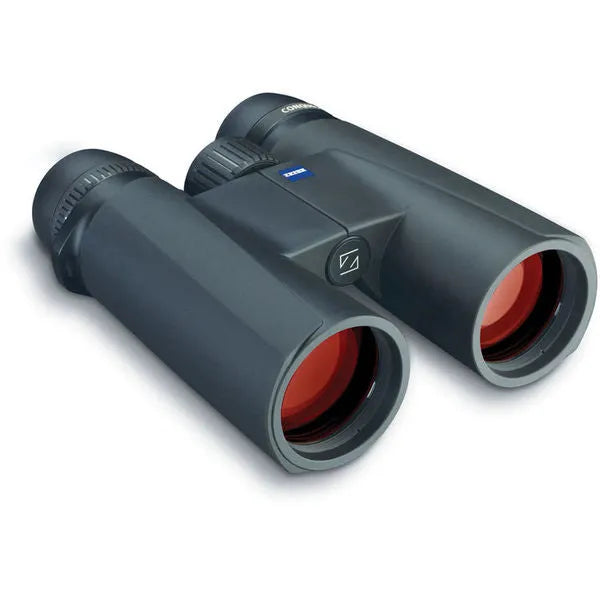
In addition to the diameter of the lens, another element also determines the weight of binoculars: their configuration. Many people think of binoculars with the traditional Porro prism configuration. These binoculars, which are rather large and bulky, are characterized by an offset of the bezels in relation to the eyepieces, hence their W-shape.
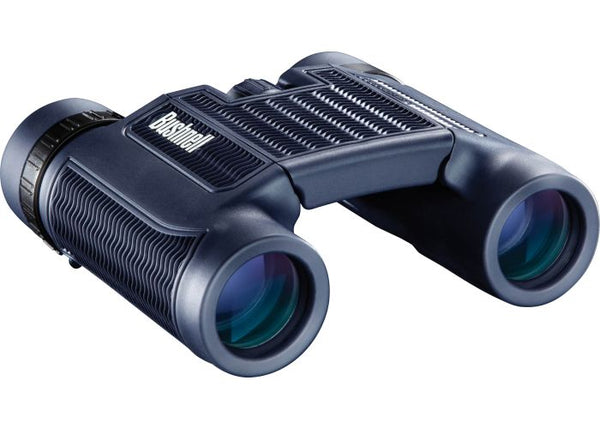
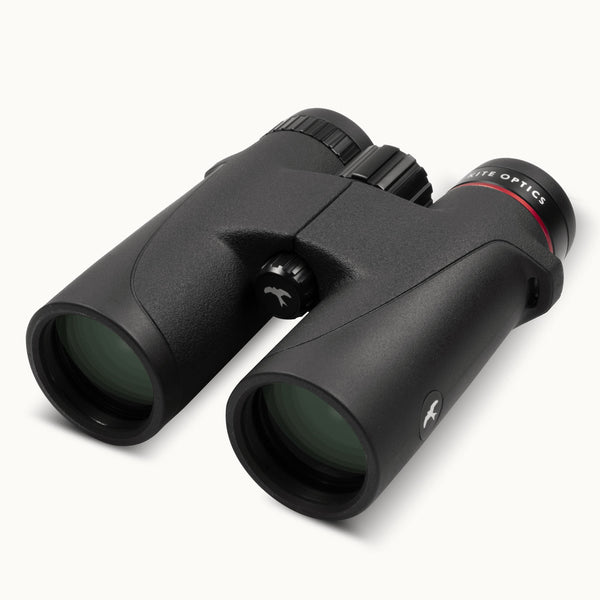
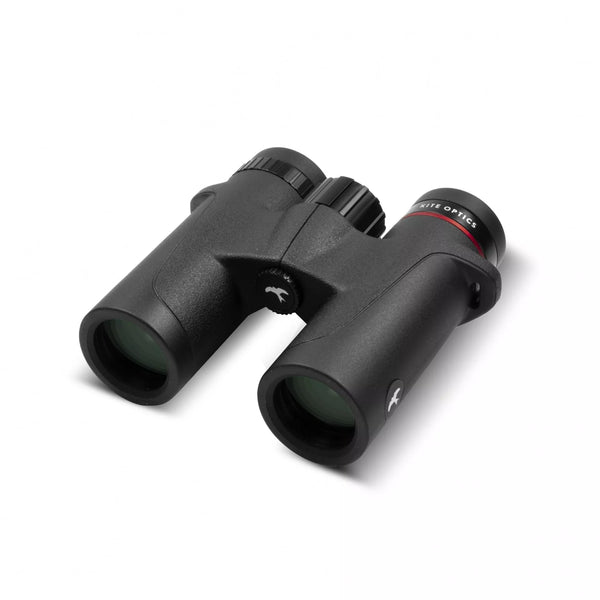
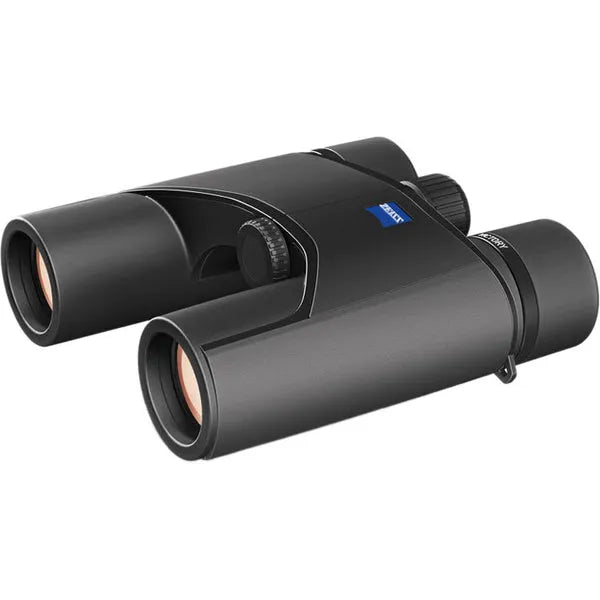
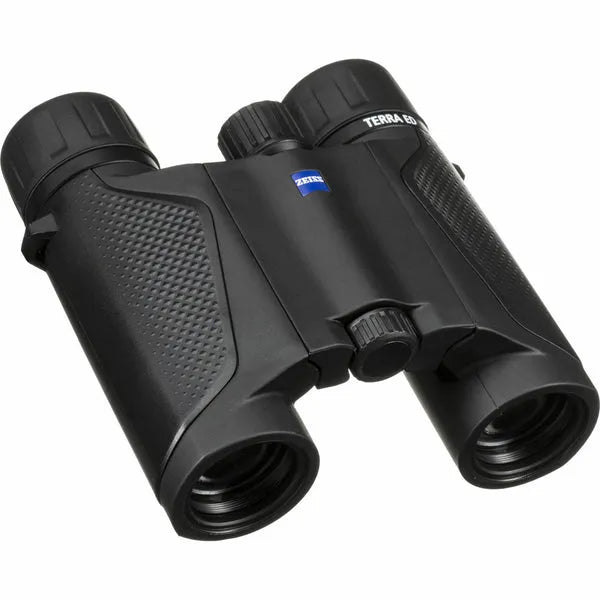
More recently, however, manufacturers have begun selling roof prism binoculars. These binoculars have straight eyepieces, giving them an H-shape. They are also more compact and, in general, much lighter than earlier models in the same category.
Roof prism binoculars are designed to be easier to carry, making them the preferred choice of hikers. As lens diameter plays a less important role in this case, weight is no longer an issue.
Field of view
The field of view is what you can see when you look through the binoculars. This is usually specified by a measurement in meters over a distance of 1,000 m. For example, let's say your binoculars have a field of view of 120 m over 1,000 m. If you look at a wall at a distance of 1,000 m, you will see part of the wall, measuring 120 m in diameter.
This may sound complex, but the bottom line is that a wider field of view means you can enjoy the landscape more. As a general rule, the higher the magnification, the narrower the field of view.
The environment
The last thing you should consider when choosing your binoculars is the environment, and not just your own. The weather must also be taken into account, because although most people prefer to go hiking when the weather is fine, atmospheric conditions can sometimes change rapidly.
The vast majority of binoculars today are water-resistant, which should be adequate to protect optical instruments from rain. However, you may also want to consider binoculars with lenses that have an anti-fog coating, especially in humid environments.
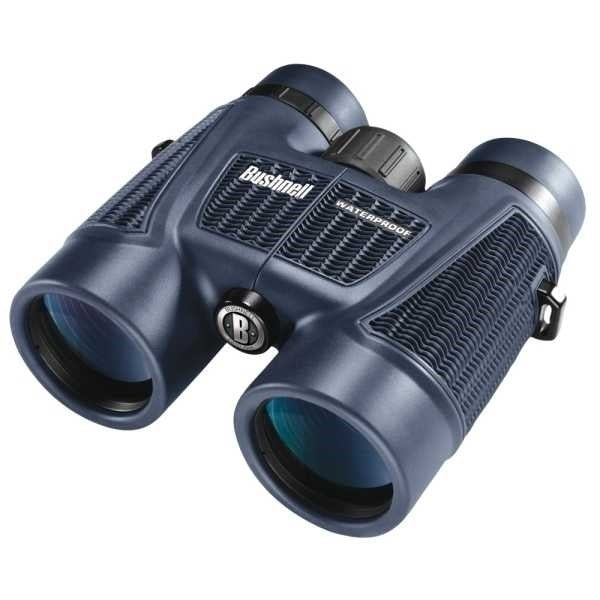
Finally, waterproof (not just water-resistant) binoculars are a very good option. No one intends to drop their binoculars in the water, but accidents do happen, and in such cases you'll be glad to know that water can't penetrate or damage your binoculars. Even if you don't hike near water sources, investing in waterproof binoculars is safer and more practical.
In short, for hiking, binoculars with a magnification between 8x and 10x, with a lens diameter between 20 and 50 mm, are enough to meet your main needs.
Frequently asked questions :
Is it worth buying binoculars for hiking?
Absolutely! In addition to good footwear, binoculars have become an indispensable item for hikers and backpackers. While you can certainly enjoy the scenery, wildlife and birdlife with your own eyes, with binoculars you can discover so much more! Why deprive yourself?
What's the difference between 8×42 and 10×42 binoculars?
The first number indicates the magnification. In the case of a pair of 8×42 binoculars, you'll get 8x magnification. 10×42 binoculars offer 10x magnification. The second number refers to the size of the lens diameter, measured in millimeters. The larger the diameter, the more light the binoculars capture. But when it comes to daytime use, a large objective diameter doesn't offer much benefit without high magnification. In this case, the lens diameter is the same, but binoculars with higher magnification than the 10×42 may enable you to observe your targets even more closely.
What are the best binoculars for long-distance observation?
If your target is far away, you'll need binoculars with higher magnification to get a better view. Usually, 8x magnification is perfectly suitable for hiking, but for long-distance observation, 10x magnification is preferable. It may also be wise to consider a lens diameter of between 40 and 50 mm, allowing you to make out more detail. However, large binoculars are also heavier.
What should I look out for if I want to find the best binoculars for hiking?
The answer to this question will depend on many factors, such as where you'll be hiking and for how long. However, weight may be the deciding factor. Roof prism (H-shaped) binoculars are designed to be lighter and, although 8x magnification is sufficient, if your target is really far away, you may prefer to opt for a 10x version. Be aware, too, of the environment you'll be in, and consider waterproof binoculars if you're walking near water sources such as streams, rivers or lakes.



